

Node.js Backend Development That Handles Real Traffic Reliably
A backend that works fine in testing but buckles under real user load, loses data during traffic spikes, exposes security vulnerabilities, or depends entirely on one developer who documented nothing - these aren't just engineering problems, they're business continuity risks. At Brainspack, we build Node.js backends that are fast, scalable, and reliable under real-world conditions - event-driven architecture, clean API design, proper authentication, and infrastructure that's documented well enough that your team can own it the day we hand it over. We don't disappear after deployment. We stay with you as your long-term backend partner.
Node.js Backend Solutions for Real Engineering Problems
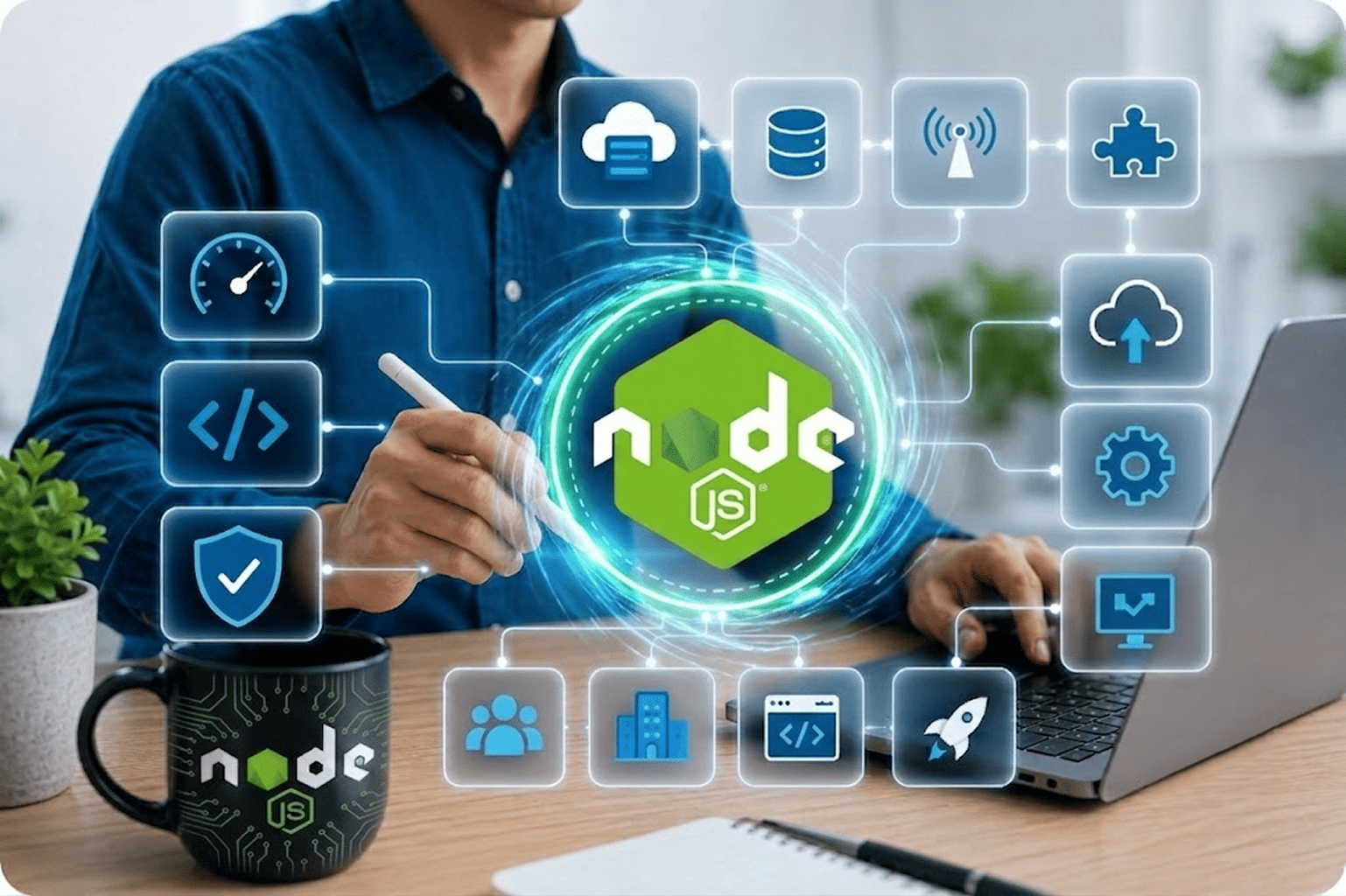
Every backend service we build starts with the specific reliability, performance, or scalability problem your current setup is causing. We don't default to Node.js because it's popular - we use it because it's the right choice for event-driven, high-concurrency, real-time backend systems, and we build it in a way your team can actually maintain.
No services found. Please add services from the Services post type.
Figma
Figma is a cloud-based design and prototyping tool, enabling collaborative real-time editing for teams. It features powerful vector editing, interactive prototyping, and supports design consistency through components and styles. With cross-platform accessibility, Figma streamlines the entire design process from creation to developer handoff.
Adobe XD
Adobe XD is a powerful design and prototyping tool that simplifies the creation of user interfaces and experiences. With a user-friendly interface and robust features, it enables designers to efficiently design and prototype websites and applications. Collaboration is seamless, and interactive prototypes allow for thorough testing of designs, making it a go-to tool for UI/UX professionals.
Photoshop
Adobe Photoshop is a powerful raster graphics editor used for image editing, retouching, and manipulation. It provides a wide range of tools for creating and enhancing digital images, including layers, filters, and various effects. Widely used by photographers and designers, Photoshop is an industry-standard software for professional image editing and graphic design.

REST API Development
Poorly designed REST APIs - inconsistent naming, missing validation, undocumented endpoints, no versioning strategy - create a maintenance burden that compounds over time. Every new frontend feature becomes a negotiation with technical debt. We design and build clean, well-documented REST APIs with consistent structure, proper error handling, input validation, and versioning - so your frontend team can move fast without stepping on backend landmines.

Real-Time Application Backend
Chat features, live dashboards, collaborative tools, notification systems, real-time data feeds - these require a backend architecture specifically designed for persistent connections and event-driven updates. Node.js's non-blocking I/O model makes it exceptionally well-suited for this. We build real-time backends using Socket.io and WebSocket implementations that handle thousands of concurrent connections without the performance degradation that would kill a thread-based server.


Microservices Architecture
A monolithic backend that's grown too large to deploy safely, too coupled to scale individual components, and too slow to release updates without touching everything - this is one of the most common pain points in growing products. We design and build Node.js microservice architectures that break your backend into independently deployable, independently scalable services - with proper inter-service communication, shared authentication, and the observability to actually understand what's happening across the system.
Database Integration & Optimisation
Slow queries, inefficient schema design, N+1 query problems, no connection pooling, and databases that weren't designed for the access patterns you're actually using - these are the hidden causes of most backend performance problems. We integrate and optimise PostgreSQL, MongoDB, MySQL, and Redis - writing efficient queries, designing appropriate indexes, implementing caching strategies, and structuring your data layer for the access patterns your application actually needs.

Authentication & Security
Authentication bolted on as an afterthought - JWT tokens without proper expiry handling, no refresh token rotation, missing rate limiting, SQL injection vulnerabilities in user inputs, secrets committed to repositories - creates liability that can be catastrophic. We implement authentication and security from the ground up: OAuth 2.0, JWT with proper lifecycle management, role-based access control, input sanitisation, rate limiting, and secrets management. Security is not an add-on; it's built into the architecture.

Backend Performance Optimisation
If your existing Node.js backend is slow, memory-intensive, or hitting performance ceilings - a complete rebuild is almost never the first answer. We start with profiling: identifying where time is actually being spent, where memory is leaking, where queries are slow, and where the event loop is being blocked. Then we fix the specific problems. Most clients see significant performance improvements without a full rebuild.
Technologies We Use
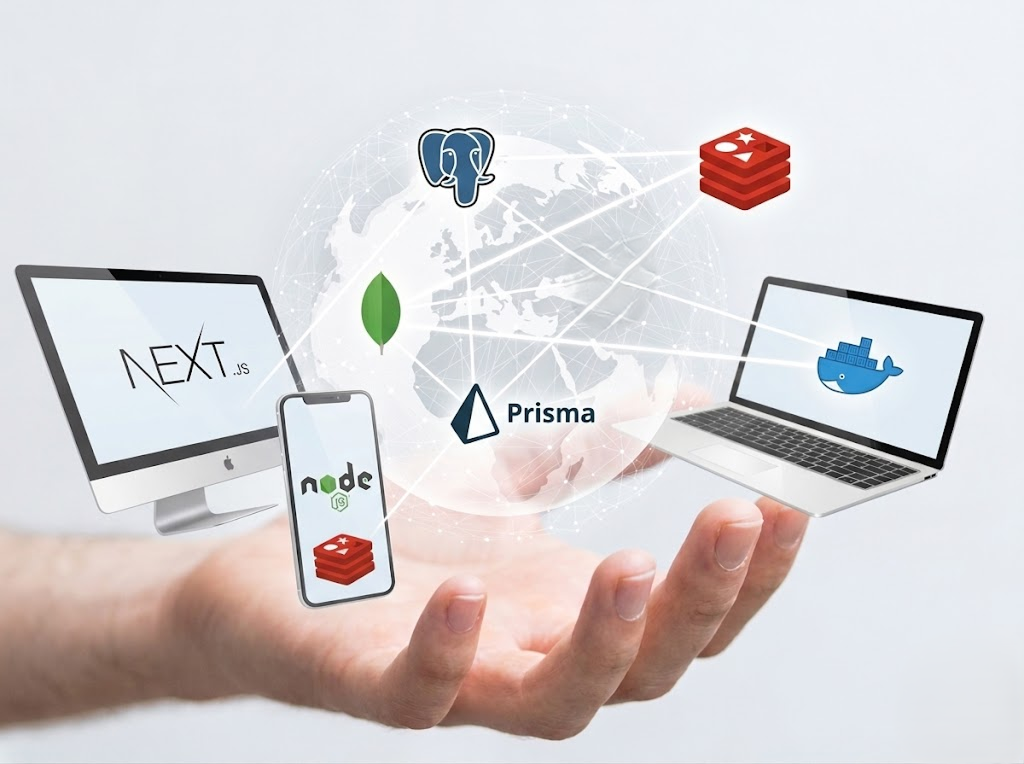
We build Node.js backends with Express.js for clean, flexible API routing; NestJS for enterprise-grade, structured TypeScript applications; and Fastify when raw throughput performance is the priority. Our database stack covers PostgreSQL and MySQL for relational data, MongoDB for document storage, and Redis for caching and session management. We use Prisma for type-safe database access, Socket.io for real-time, PM2 for process management, and Docker for consistent deployment environments. Every technology is chosen for your specific requirements and documented thoroughly at handover.
Streamline your business operations.
- Add a feature section about the product.
- Add a feature section about the product.
- Single upfront payment.
Task management

Curious george
UI UX designer
1 days Ago
Progress Tracking



Ensure strong solutions are available at all times
Until recently, the prevailing view assumed lorem ipsum was born as a nonsense text. It's not Latin though it looks like nothing.
- On demand support
- Information Sharing
- Cloud Technology


Select the pricing plan that best suits your needs.
Simplified
For individuals and small teams with unlimited trial access.
$19.00
Monthly
$230.00
Yearly
- Single Payment
- Selling your own items
- Powerful integration
Basic
For individuals and small teams with unlimited trial access.
$3342.00
Monthly
$4420.00
Yearly
- Unlimited Bandwidth
- Promotional Tools
- Single Payment
- Single Payment
- Selling your own items
- Powerful integration
Enhanced
For individuals and small teams with unlimited trial access.
$4800.00
Monthly
$5800.00
Yearly
- Selling on your own conditions
- Seamless integrations
- Real-time streaming
Our Proven Node.js Development Process
Too many Node.js projects fail not because the technology doesn't work, but because the problem wasn't properly defined, the data wasn't ready, or the solution was built in isolation from the people who'd actually use it. Our process is built to avoid all three.





Why Businesses Choose Brainspack for Node.js Development
Performance Under Load
We build for concurrency from day one - not optimised after users start complaining. Node.js's event-driven model is used correctly, not accidentally.
Security Is Not an Afterthought
Authentication, input validation, rate limiting, and secrets management are built into the architecture - not added at the end.
Clear Communication
Weekly updates, direct project lead access, written summaries at every milestone.
Your Team Can Own It
Clean TypeScript, proper documentation, and handover training. No proprietary patterns, no magic that only we understand.
No Dependency on Us
Full documentation, clean code, and training. You can hand our codebase to any competent Node.js developer and they'll understand it immediately.
People Also Ask
Almost never. Most Node.js performance problems are caused by a small number of identifiable issues - blocking the event loop with synchronous operations, unoptimised database queries, missing caching, memory leaks, or inefficient middleware. We start with profiling to find the actual bottlenecks, then fix them specifically. A full rebuild is only warranted when the underlying architecture is fundamentally incompatible with your performance requirements.
Node.js excels at I/O-intensive, high-concurrency, real-time applications - APIs serving many simultaneous users, WebSocket applications, and microservice architectures where inter-service communication needs to be fast. Python is often the better choice for data-heavy applications, ML pipelines, and scientific computing. PHP is still practical for content-heavy sites with existing WordPress infrastructure. We'll give you an honest recommendation for your specific use case - and we won't default to Node.js if something else is the better fit.
Yes - and this is one of the most common engagements we take on. We start with a thorough code audit: architecture review, security assessment, dependency health check, and performance baseline. We give you a clear picture of what's well-built, what needs improvement, and what represents active risk. Then we fix the things that matter most, systematically, without unnecessarily rewriting what's fundamentally sound.
Carefully and with proper planning. We use migration tools (Prisma Migrate, Flyway, or custom migration scripts depending on your stack), design migrations to be backward-compatible where possible, test in staging environments that mirror production, and schedule deployments to minimise user impact. Zero-downtime migrations are achievable for most schema changes with the right approach - and we've done it many times.
A clean REST API backend for a web or mobile application typically takes 4–8 weeks. A more complex backend with real-time features, microservices architecture, or significant third-party integrations ranges from 8–16 weeks. We give you a phased timeline in your first consultation.
Yes. Our offices are in Mohali (Punjab) and Yamuna Nagar (Haryana), but we work with engineering teams across India and internationally. Backend development is fully remote-friendly - we work through shared repositories, secure environment access, regular video calls, and written documentation throughout.