

PolicyLens AI - Smarter Insurance Comparison for Australia
Most insurance comparison platforms lead with price - the one metric that tells you almost nothing about real protection. Two policies at the same price can differ dramatically in sub-limits, exclusions, and benefit structures. The only way to spot those differences is to manually read 9 Product Disclosure Statements side by side - and nobody does that.
PolicyLens AI changes that. It lets Australian business owners compare coverage across 9 major insurers by actual protection strength - not price - through plain English questions and structured, side-by-side comparisons grounded in real policy wording.
Why Business Insurance Comparison Is Broken
The client was an Australian insurance broker who saw a fundamental problem: every comparison platform leads with price, but price tells you nothing about what happens when you need to make a claim. The information that actually matters lives buried inside Product Disclosure Statements - dense, 60+ page legal documents that each insurer formats differently. Manual comparison takes hours and doesn’t scale.
They’d tried simpler approaches - static comparison tables, PDF summaries, a basic FAQ chatbot. None worked. Static tables went stale immediately, and the FAQ chatbot couldn’t compare specific coverage details across insurers or drill into a single policy’s exclusions. They needed an AI system intelligent enough to understand insurance documents at a granular level and deliver answers through a simple conversational interface.
The Challenges
9 PDSs, Zero Standardisation
Nine insurers, nine different PDS formats, terminology, and structures - all needing to be normalised into one comparable framework.
Two Types of Questions, Two Different Architectures
Instant structured lookups and deep PDS retrieval needed to work seamlessly within the same system.
Regulatory Sensitivity
Every response needed strict guardrails - comparing policy wording only, never crossing into regulated financial advice.
Trust Through Source Attribution
Every comparison had to be traceable to a specific PDS clause - source attribution wasn't a feature, it was foundational.
Zero Tolerance for Hallucination
A fabricated detail could mean the wrong policy purchased - the system needed aggressive grounding, refusing to speculate when information wasn't in the PDS.
Technologies Used
Python
FastAPI
LangGraph
LangChain
AWS EC2
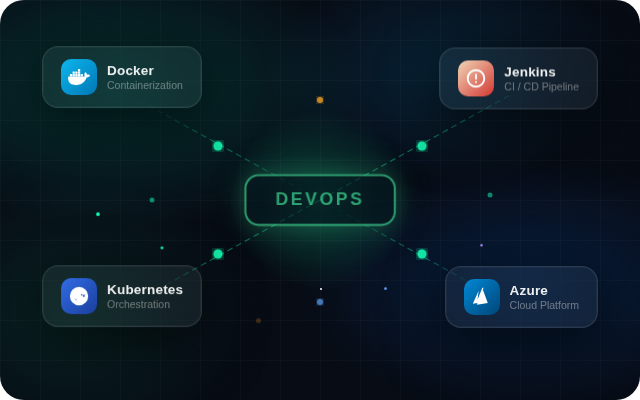
Docker
Pinecone
WebSocket
Compare Fast, Then Go Deep
We built a hub-and-spoke multi-agent system: one Orchestrator Agent handles all comparisons using pre-extracted structured data, and nine Specialist Agents - one per insurer - handle deep-dive queries using RAG retrieval from the full PDS text. The Orchestrator generates instant comparison tables; the Specialists answer detailed coverage questions with source citations. Users move seamlessly between comparison and deep-dive modes.

Orchestrator Agent - Instant Comparisons
Generates instant side-by-side comparison tables across all 9 insurers - with seamless handoff to Specialist Agents for deeper queries.
9 Specialist Agents - Deep Policy Expertise
Each Specialist Agent searches only one insurer's PDS - returning clause-referenced answers and explicitly stating when information isn't found.
Two-Layer Data Ingestion
Structured variable extraction powers instant comparison tables. Full-text RAG chunking with clause-level metadata in insurer-specific namespaces powers deep Specialist Agent retrieval.

Regulatory Guardrails & Anti-Hallucination
Non-bypassable safety layers enforce scope, block hallucinations, and prevent prompt injection - comparing policy wording only, never recommending a purchase.

Conversation State & Seamless Agent Hand-Offs
The Orchestrator tracks full conversation state - prior comparisons, active insurer, and routing decisions - so users never lose context switching between comparison and deep-dive modes.

Embeddable Widget with Real-Time Streaming
Single script tag deployment, no registration required. Real-time WebSocket streaming and structured comparison tables rendered directly in the chat interface.
Our Solutions

AI Automation Engine
Built intelligent workflows to automate repetitive processes.
Scalable Architecture
Built a cloud-based system capable of handling large-scale operations.
Real-Time Analytics
Implemented dashboards to provide instant business insights.
UI / UX Optimization
Designed intuitive interfaces for seamless user interaction.
Technologies Used
ReactJS
NodeJS
AWS
Docker
No services found. Please add services from the Services post type.
Figma
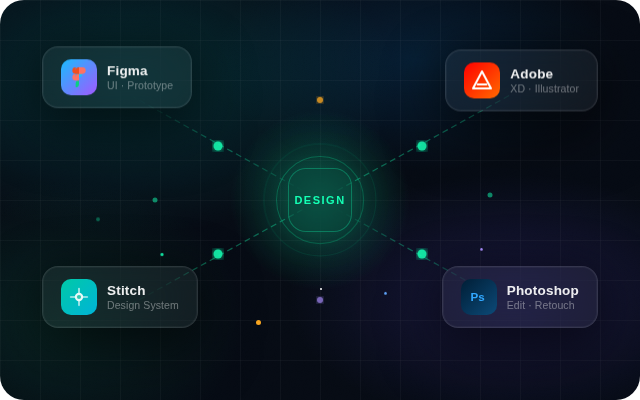
Figma is a cloud-based design and prototyping tool, enabling collaborative real-time editing for teams. It features powerful vector editing, interactive prototyping, and supports design consistency through components and styles. With cross-platform accessibility, Figma streamlines the entire design process from creation to developer handoff.
Adobe XD
Adobe XD is a powerful design and prototyping tool that simplifies the creation of user interfaces and experiences. With a user-friendly interface and robust features, it enables designers to efficiently design and prototype websites and applications. Collaboration is seamless, and interactive prototypes allow for thorough testing of designs, making it a go-to tool for UI/UX professionals.
Photoshop
Adobe Photoshop is a powerful raster graphics editor used for image editing, retouching, and manipulation. It provides a wide range of tools for creating and enhancing digital images, including layers, filters, and various effects. Widely used by photographers and designers, Photoshop is an industry-standard software for professional image editing and graphic design.


HTML
HTML stands as the fundamental framework for web content, employing tags to meticulously structure and visually present information

CSS
CSS styles web content, enhancing visual appeal through design, layout, and presentation for immersive user experiences


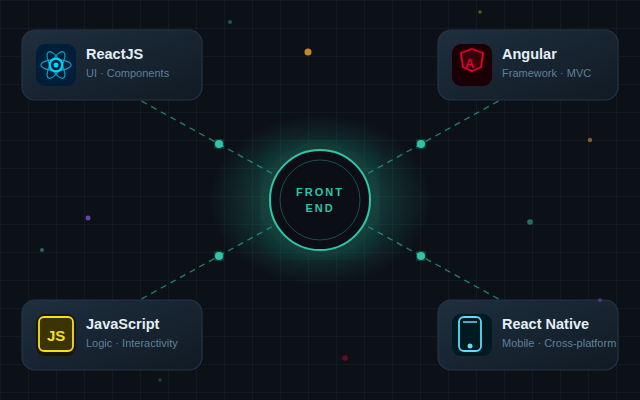
JavaScript
JavaScript powers dynamic web behavior, enabling interactive features, animations, and seamless user experiences on websites.

ReactJS
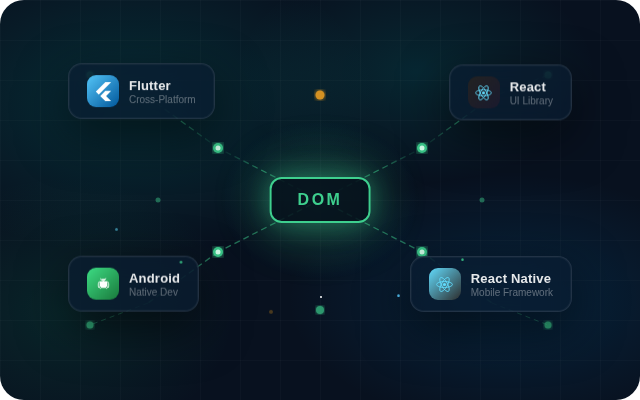
ReactJS revolutionizes web development with a declarative, component-based approach, fostering efficient, scalable, and interactive interfaces.
Angular
Angular empowers application development, delivering a solid structure for creating dynamic, scalable, and feature-rich experiences effortlessly.
React Native
React Native streamlines cross-platform mobile app development, ensuring efficiency and code-sharing between iOS and Android platforms.
No services found. Please add services from the Services post type.
Uizard
Uizard is an AI-powered design tool that helps users quickly create UI/UX designs, wireframes, and prototypes without needing advanced design skills. It allows you to turn ideas, sketches, or text prompts into fully designed interfaces in minutes.
Galileo AI
Galileo AI is an advanced AI design tool that generates high-fidelity UI designs from simple text prompts. It helps designers and teams quickly turn ideas into visually appealing app and website interfaces without starting from scratch.
Google Stitch
Google Stitch is an AI-powered design tool that quickly transforms ideas into high-quality UI designs, generating layouts and components from simple inputs to make the design process faster, easier, and more efficient.
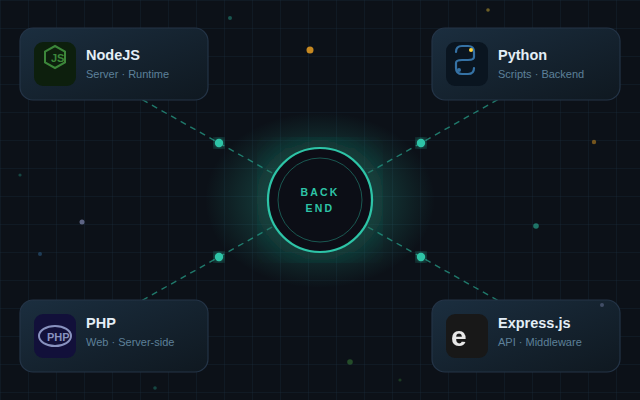
Node.Js
Node.js fuels server-side JavaScript, facilitating scalability and efficiency in web applications and APIsA.

PHP
PHP is a server-side scripting language for dynamic web development. Popular backend language with the Laravel framework for building secure and structured web applications.

Python
Used for rapid backend development, building APIs, and handling data-driven applications with simple and clean syntax.
Streamline your business operations.
- Add a feature section about the product.
- Add a feature section about the product.
- Single upfront payment.
Task management

Curious george
UI UX designer
1 days Ago
Progress Tracking



Ensure strong solutions are available at all times
Until recently, the prevailing view assumed lorem ipsum was born as a nonsense text. It's not Latin though it looks like nothing.
- On demand support
- Information Sharing
- Cloud Technology


Select the pricing plan that best suits your needs.
Simplified
For individuals and small teams with unlimited trial access.
$19.00
Monthly
$230.00
Yearly
- Single Payment
- Selling your own items
- Powerful integration
Basic
For individuals and small teams with unlimited trial access.
$3342.00
Monthly
$4420.00
Yearly
- Unlimited Bandwidth
- Promotional Tools
- Single Payment
- Single Payment
- Selling your own items
- Powerful integration
Enhanced
For individuals and small teams with unlimited trial access.
$4800.00
Monthly
$5800.00
Yearly
- Selling on your own conditions
- Seamless integrations
- Real-time streaming
Requirement Analysis
Requirement Analysis
Requirement Analysis
Requirement Analysis
Measurable Impact
Building for a vulnerable user population means impact is measured in trust and engagement, not just technical uptime. Here’s what Aura achieved:
9
<2s
100%
0
Quality Outcomes
Protection-First Buying
Users made coverage decisions based on sub-limits and exclusions rather than price alone - reducing under-insurance risk.
Broker Time Savings
Replaced 2–3 hours of manual PDS analysis per comparison with conversational queries that take minutes.
Zero Hallucination
Pre-extracted structured data for comparisons and grounded RAG for deep dives meant no fabricated coverage claims in production.
Scalable to New Insurers
Adding a new insurer requires ingesting their PDS and creating a templated Specialist Agent. No core system changes needed.
Regulatory Confidence
Zero compliance violations in production - no financial advice, no guardrail bypasses, full regulatory confidence from day one.
How We Built Aura
Aura
Delivered
How We Built PolicyLens AI
How We Built Aura
Aura
Delivered
What Makes PolicyLens AI Different
Protection-Led, Not Price-Led
Users compare actual coverage - limits, exclusions, and benefits - shifting decisions from cheapest to best protection.
Instant Comparison Tables
Comparison queries generate instant side-by-side tables from pre-extracted data-no slow document searches needed.
Deep Dive into Any Insurer
Seamlessly move from comparison to deep insurer analysis-covering exclusions, conditions, and clauses with source-backed references.
Embeddable Widget, Zero Friction
Single script deployment-no login required-with real-time responses and instant comparison tables in chat.
Per-Insurer Knowledge Isolation
Each insurer’s data lives in a completely separate vector database namespace. No cross-contamination between insurers’ policy details.
Source Attribution on Every Answer
Every claim is traceable to a specific PDS section and clause reference. Users can verify any answer against the source document.
Project Screenshots

Common Questions About This Project
A public-facing AI chatbot that compares business insurance coverage across 9 Australian insurers based on actual policy wording - sub-limits, exclusions, conditions, and benefit structures - rather than price. Users get instant comparison tables and can deep-dive into any single insurer’s PDS with source-attributed answers.
Existing tools lead with price. PolicyLens AI leads with protection. It delivers instant structured comparison tables from pre-extracted data and deep-dive RAG retrieval from full PDS text - with every answer citing the source section for verification.
Comparison queries use pre-extracted, verified structured data. Deep-dive queries are grounded exclusively in retrieved PDS text with source citations. When information isn’t in the PDS, the system says so explicitly rather than guessing.
No. PolicyLens AI compares policy wording only. It never recommends purchases, assesses insurer strength, or provides financial advice. These boundaries are enforced at multiple layers and cannot be bypassed.
Yes. Adding a new insurer requires ingesting their PDS and creating a templated Specialist Agent. The Orchestrator automatically incorporates new insurers into comparisons. No core changes needed.
Absolutely. The architecture - multi-agent RAG with document isolation, structured data extraction, source attribution, and regulatory guardrails - applies to any industry where users need to compare complex documents: legal contracts, healthcare policies, financial products, regulatory compliance.
Need an AI chatbot that understands your documents - with source attribution, regulatory guardrails, and answers your customers can trust?
We build document-grounded AI systems for insurance, legal, healthcare, and finance. If your domain demands accuracy and transparency, let’s talk.