

React Native Development Services
For iOS and Android Without Compromise
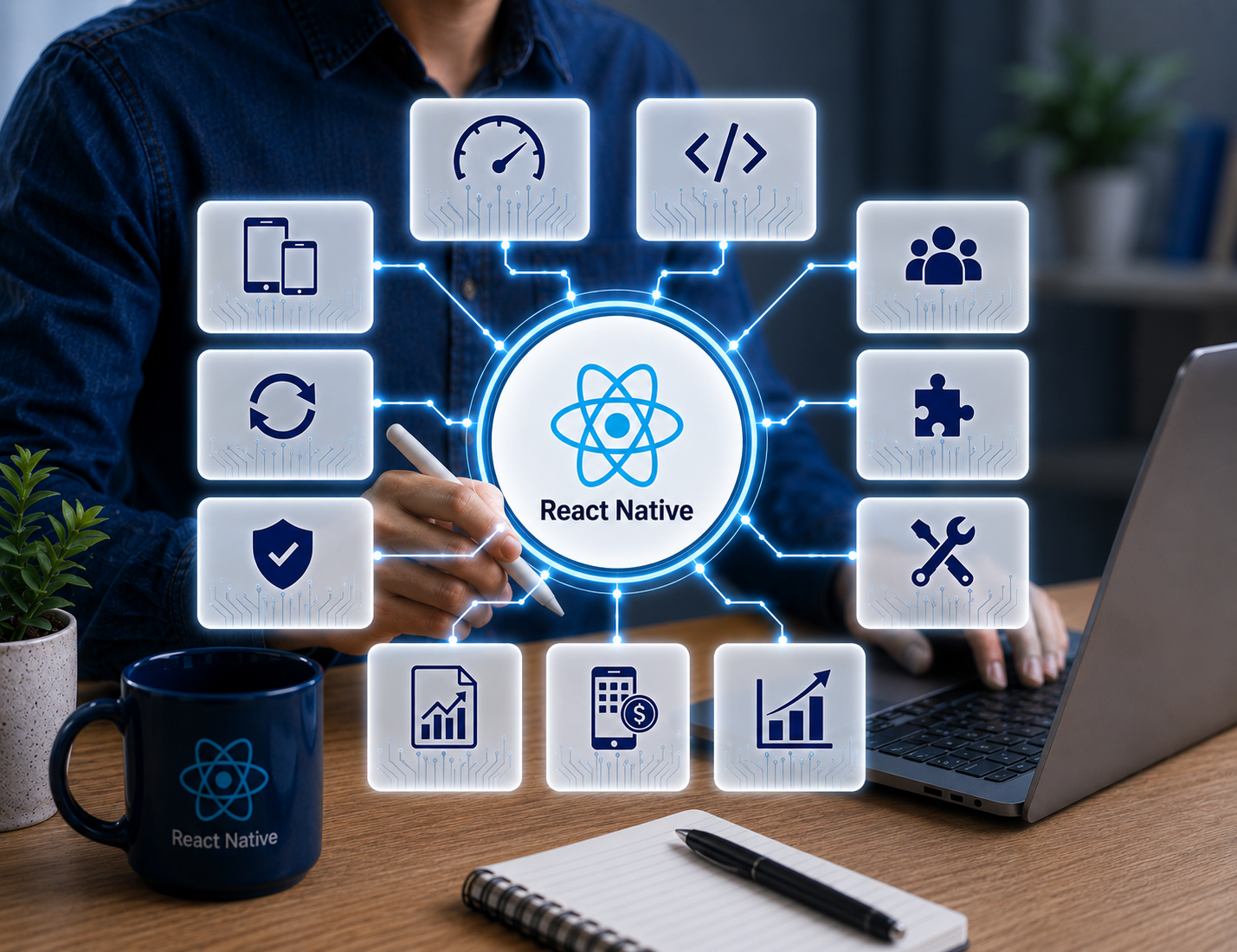
Maintaining separate iOS and Android codebases doesn't just double your costs - it introduces divergence, delays, and the constant risk that a feature works on one platform and breaks on the other. At Brainspack, we build React Native applications that share a single, clean JavaScript codebase across both platforms while delivering the native performance and platform-specific feel your users expect. Real navigation, real native modules, real performance - not a web wrapper pretending to be an app. And we stay with you after launch, because mobile development doesn't stop when the app goes live.
React Native Development Solutions For Real Business Problems
Every React Native project we build starts with the specific mobile problem the business is facing - budget constraints from maintaining two native codebases, slow release cycles, inconsistent experience across platforms, or an existing app that's become expensive to maintain. We solve those problems.
No services found. Please add services from the Services post type.
Figma
Figma is a cloud-based design and prototyping tool, enabling collaborative real-time editing for teams. It features powerful vector editing, interactive prototyping, and supports design consistency through components and styles. With cross-platform accessibility, Figma streamlines the entire design process from creation to developer handoff.
Adobe XD
Adobe XD is a powerful design and prototyping tool that simplifies the creation of user interfaces and experiences. With a user-friendly interface and robust features, it enables designers to efficiently design and prototype websites and applications. Collaboration is seamless, and interactive prototypes allow for thorough testing of designs, making it a go-to tool for UI/UX professionals.
Photoshop
Adobe Photoshop is a powerful raster graphics editor used for image editing, retouching, and manipulation. It provides a wide range of tools for creating and enhancing digital images, including layers, filters, and various effects. Widely used by photographers and designers, Photoshop is an industry-standard software for professional image editing and graphic design.

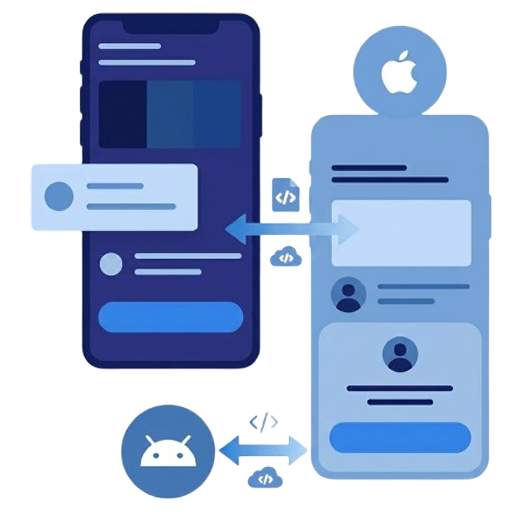
Cross-Platform React Native Development
A React Native app that feels slightly wrong on iOS because it was built by developers who were thinking in Android terms - or vice versa - loses user trust immediately. Platform conventions matter. We build React Native applications that feel genuinely native on both iOS and Android: proper navigation patterns for each platform, correct gesture handling, platform-specific component variants where needed, and a shared business logic layer that keeps the codebase unified without forcing a lowest-common-denominator UI.
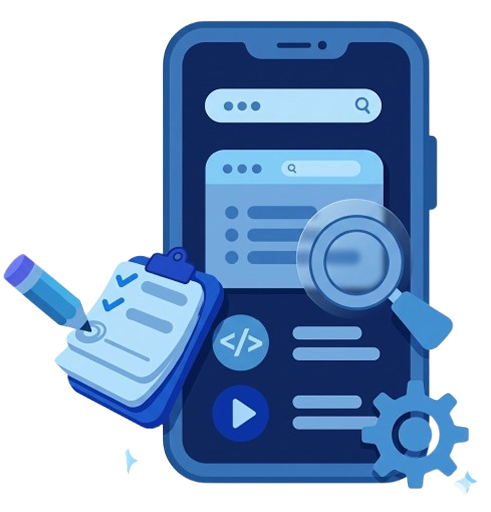
React Native Performance Optimisation
A React Native app that feels sluggish - slow navigation transitions, list scroll performance issues, large bundle sizes causing long cold start times, JavaScript thread blocking causing UI freezes - is damaging user retention. We profile using Flipper and the React Native performance monitor to identify exactly where the bottlenecks are, then fix them: Hermes engine optimisation, FlatList configuration, Reanimated for UI-thread animations, and Metro bundle configuration for startup performance.
App Testing & Store Submission
App Store and Play Store rejections after development is complete are expensive and frustrating - and almost always avoidable with the right process. We test across real iOS and Android devices covering your actual user base, run compliance reviews before submission, handle both store submissions, and manage the back-and-forth with reviewers if issues arise. Your launch is planned, not scrambled.
React Native UI/UX Design
React Native gives you the capability to build beautiful mobile interfaces. Generic component library implementations don't give you the actuality. We design custom React Native interfaces built on your brand - expressive, performant, and designed around the real interaction patterns of mobile users on both platforms. Smooth animations with Reanimated, custom gesture handling, and interfaces that feel premium, not assembled.
Native Module Integration
When your React Native app needs to access device capabilities that don't have JavaScript bridge equivalents - Bluetooth, NFC, custom camera processing, biometric authentication, platform-specific SDKs - the bridge needs to be built carefully or it becomes a performance and stability liability. We build and integrate custom native modules in Swift/Objective-C for iOS and Kotlin/Java for Android, giving your React Native app access to the full native capability of each platform without compromising the shared codebase architecture.
React Native App Maintenance
A new iOS major version that changes navigation behaviour. A React Native upgrade that requires native module updates. A third-party library that drops maintenance and needs replacing. These are the recurring realities of mobile app ownership. Our maintenance plans cover OS compatibility updates, React Native version management, dependency audits, and rapid response when something breaks in production.
Technologies We Use
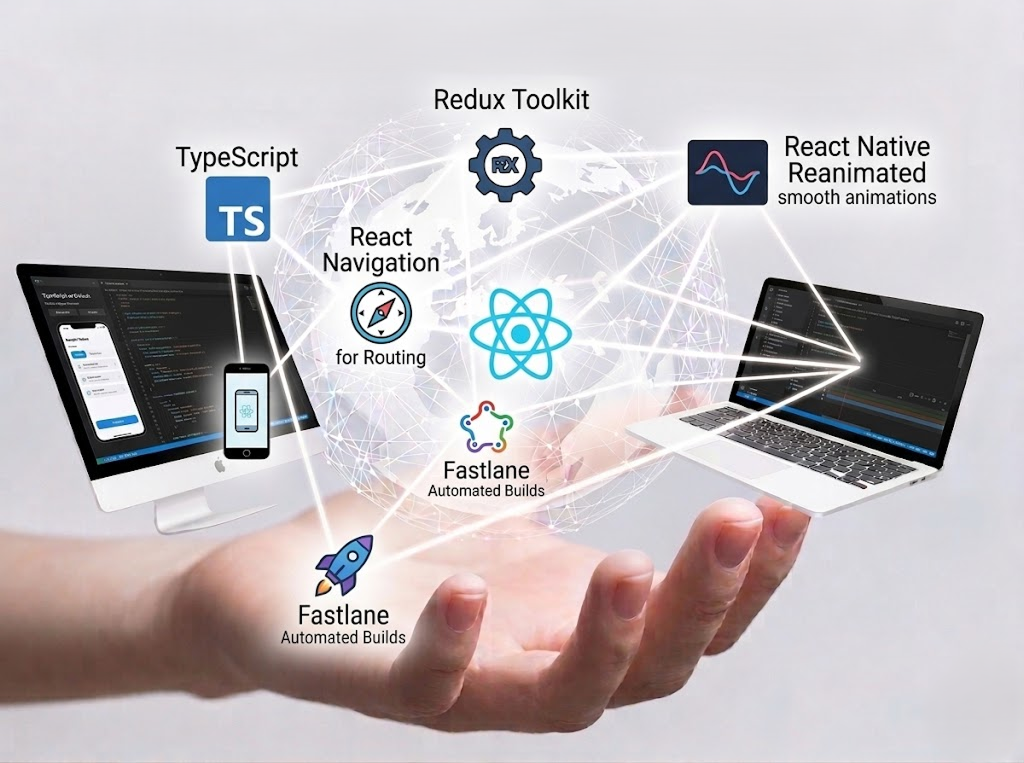
We build React Native applications with TypeScript as the default, React Navigation for routing (with platform-appropriate navigation patterns), Redux Toolkit or Zustand for state management, and React Query for server state. For animations and gestures, we use React Native Reanimated and React Native Gesture Handler - both UI-thread based, not JavaScript-thread based, which is the difference between smooth and janky. Firebase for backend services and push notifications, Fastlane for automated store builds and deployment, and Bitrise or GitHub Actions for CI/CD. Every tool documented. Everything handed over.
Streamline your business operations.
- Add a feature section about the product.
- Add a feature section about the product.
- Single upfront payment.
Task management

Curious george
UI UX designer
1 days Ago
Progress Tracking



Ensure strong solutions are available at all times
Until recently, the prevailing view assumed lorem ipsum was born as a nonsense text. It's not Latin though it looks like nothing.
- On demand support
- Information Sharing
- Cloud Technology


Select the pricing plan that best suits your needs.
Simplified
For individuals and small teams with unlimited trial access.
$19.00
Monthly
$230.00
Yearly
- Single Payment
- Selling your own items
- Powerful integration
Basic
For individuals and small teams with unlimited trial access.
$3342.00
Monthly
$4420.00
Yearly
- Unlimited Bandwidth
- Promotional Tools
- Single Payment
- Single Payment
- Selling your own items
- Powerful integration
Enhanced
For individuals and small teams with unlimited trial access.
$4800.00
Monthly
$5800.00
Yearly
- Selling on your own conditions
- Seamless integrations
- Real-time streaming
Our Proven React Native Development Process
Too many React Native projects fail not because the technology doesn't work, but because the problem wasn't properly defined, the data wasn't ready, or the solution was built in isolation from the people who'd actually use it. Our process is built to avoid all three.



Why Businesses Choose Brainspack for React Native Development
One Codebase, Both Platforms
Feature parity across iOS and Android without the overhead of separate teams and separate release cycles.
Real Device Testing
Not emulators. We test on the actual device range your users own - so your users don't discover the problems we missed.
End-to-End Delivery
Design, development, testing, store submission, and post-launch support - one team, complete accountability.
Performance Without Compromise
Reanimated for UI-thread animations, proper FlatList configuration, Hermes engine - performance is built in, not optimised after complaints.
You Own the Code
TypeScript, clean architecture, full documentation, handover training. Any React Native developer can pick up and continue what we've built.
People Also Ask
Both are excellent cross-platform frameworks. React Native uses JavaScript (or TypeScript) and renders using actual native platform components - which means it integrates naturally with your web JavaScript team's skills. Flutter uses Dart and renders using its own engine - delivering pixel-perfect consistency across platforms by default. React Native is often the better choice when you have existing JavaScript/React web developers, need tight integration with native modules, or are extending a web product to mobile. Flutter tends to win on visual consistency and animation quality. We'll give you an honest recommendation in your first conversation.
Yes, when it's built correctly. React Native renders actual native components - not a web view - so the platform conventions, gesture behaviours, and system integrations are real. The key is implementing platform-specific navigation patterns and UI conventions deliberately, not defaulting to one platform's behaviour on both. We do this as standard on every project.
Most platform capabilities have community-maintained React Native packages that provide clean JavaScript interfaces. For platform features without existing packages, or where the existing packages don't meet performance requirements, we write custom native modules. The combination of the React Native ecosystem and custom native bridges gives you access to virtually everything the native platforms offer.
Almost always yes. We start with a structured audit - profiling JavaScript thread usage, UI thread performance, bundle size analysis, native module assessment, and crash log review. In most cases, the instability and slowness trace back to a small number of specific issues that can be fixed without rebuilding. We identify them, fix them, and establish monitoring so you can see the improvement measured, not just felt.
A focused MVP on both iOS and Android typically takes 8–12 weeks. A full-featured consumer or enterprise application ranges from 14–20 weeks depending on complexity, native module requirements, and integration depth. We give you a phased timeline in your first consultation.
Yes. Our offices are in Mohali (Punjab) and Yamuna Nagar (Haryana), but we work with businesses across India and internationally. React Native development is fully remote-friendly with shared repositories, regular video calls, and written updates throughout.