


By Varun Prashar – 12+ yrs engineering + deep AI expertise, fast AI-assisted development, across fintech/healthcare/e-commerce
Updated: May 2026 · 10 min read
| Let’s address the elephant in the room. You’ve probably Googled “how much does a website cost in the UK” and come away more confused than when you started. One source says £500. Another quotes £50,000. An agency in your inbox wants £15,000. A freelancer on Upwork says they’ll do it for £800.Here’s the truth: all of them could be right – for completely different projects.The range isn’t the problem. The lack of context is. So let’s fix that. |
The Honest Answer First
Website development in the UK typically costs between £500 and £100,000+. But that number is nearly useless on its own, so here’s the one that actually matters for most businesses reading this:
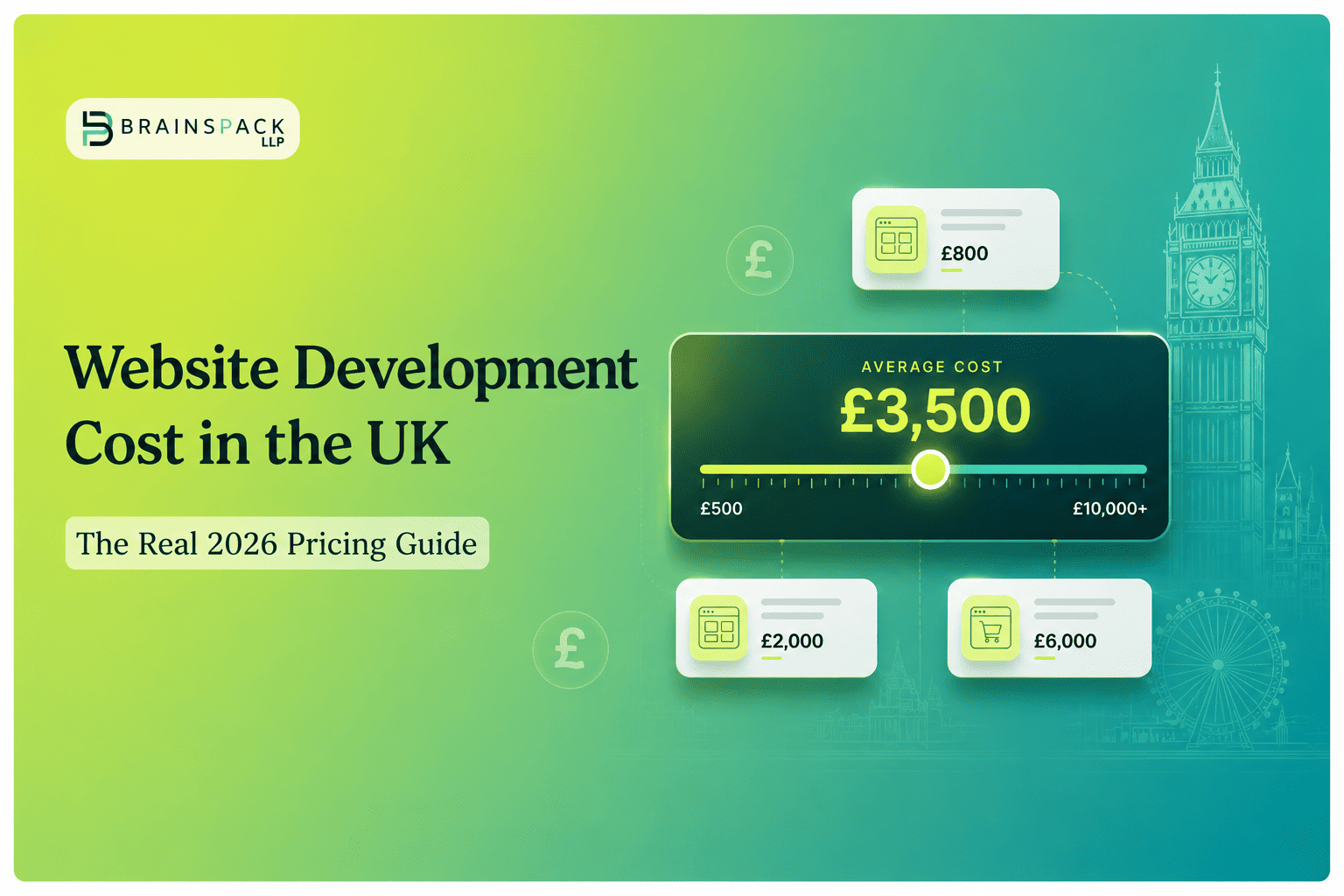
The realistic sweet spot for a professional, results-driven website in the UK is £3,000 to £10,000.
Below that, you’re usually making compromises – on design quality, SEO architecture, or scalability. Above that, you’re paying for complexity, custom functionality, or a London postcode.
Here’s a clean starting point before we go deeper:
| Website Type | Realistic Cost Range | What You’re Actually Getting |
| Portfolio / Personal | £500 – £5,000 | Simple pages, gallery, contact form |
| Blog / Content Site | £500 – £2,000 | CMS setup, basic SEO foundation |
| Small Business Website | £1,500 – £10,000 | Responsive design, lead generation, 5–15 pages |
| E-commerce Store | £5,000 – £35,000+ | Cart, payments, inventory, product pages |
| Custom Web Application | £20,000 – £100,000+ | Databases, user accounts, APIs, bespoke logic |
One thing most businesses get wrong: they look at the bottom of each range and budget for that. In practice, most projects land closer to the middle or upper end once scope is properly defined.
Who You Hire Changes Everything
The biggest single variable in your quote isn’t the website – it’s who’s building it. And each option comes with a different trade-off between cost, control, and quality.
DIY Builders (£0 – £500/year) Platforms like Wix, Squarespace, WordPress or Shopify are genuinely useful – for the right use case. If you need an online presence fast and you’re not relying on it for serious lead generation or SEO, a builder gets you there cheaply. But the ceiling is low. You’ll hit it faster than you expect, and migrating away from these platforms later is painful.
Freelancers (£1,000 – £5,000) A good freelancer is probably the best value in the market for straightforward projects. You get personal attention, flexibility, and lower overhead. The risk? You’re betting heavily on one person’s availability, skill set, and reliability. Vet carefully. Ask for references, not just a portfolio.
UK Agencies (£3,000 – £20,000+) You’re paying for a team – a designer, a developer, a project manager, often an SEO strategist. The process is more structured, the accountability is higher, and the output is usually more polished. For businesses where the website is a genuine growth asset, this is typically where the ROI is strongest.
Enterprise / Custom Builds (£50,000+) High-traffic platforms, SaaS products, complex portals, multi-region deployments. This is a different conversation entirely – scope-driven, not price-driven.
But Who You Hire Is Only Half the Decision – Your Platform Choice Is the Other Half
Most budget conversations stop at “freelancer vs agency.” That’s a mistake.
The platform your website is built on determines how much you’ll spend today, how much you’ll spend 12 months from now, and whether you’ll be rebuilding from scratch in two years because you outgrew it. Two businesses can spend the exact same £5,000 upfront and end up in completely different positions, one scaling smoothly, one starting over – simply because of the platform decision made at the start.
In practice, this is where I see the most expensive mistakes happen. Not in the build itself, but in choosing the wrong foundation for the wrong stage of growth.
Here’s a clear breakdown of every major platform option available to UK businesses in 2026 – what each costs, what you’re actually getting, and which stage of business each one is genuinely suited to.
1. WordPress Cost – Where & How to Add It
WordPress remains the most widely used platform for UK business websites, and for good reason – it offers the best balance of SEO capability, scalability, and long-term ownership.
Upfront cost by project type:
| Website Type | Estimated UK Cost | What’s Typically Included |
| Basic / Personal | £500 – £2,500 | Simple blog or portfolio, 1–3 pages |
| Small Business | £1,500 – £7,000 | 5–10 pages, SEO setup, contact forms |
| Professional Business | £2,500 – £12,000 | Custom theme, advanced plugins, security |
| Standard E-commerce | £5,000 – £30,000 | Product catalogue, payment/shipping |
| Custom Enterprise | £30,000 – £75,000+ | Bespoke functionality, deep integrations |
Ongoing annual costs to budget for:
- Domain: £5 – £30/year (.co.uk or .com)
- Hosting: £3 – £100+/month – most small businesses pay £5 – £15/month on shared hosting
- Maintenance: £50 – £500+/month for updates, security monitoring, and backups
- Premium plugins/themes: £30 – £500+/year for advanced SEO tools, booking systems, or membership features
Who builds it matters here too:
- Freelancers typically charge £500 – £5,000 per project, or £35 – £85/hour. Good for contained, clearly scoped work. The risk is capacity and support post-launch.
- Agencies range from £3,000 to £50,000+. You get a full team – designer, developer, project manager – and better accountability for complex builds.
| In practice, a properly built WordPress site for a growing UK business sits comfortably between £3,000 and £10,000 – with ongoing costs of roughly £150 – £300/month when you factor in hosting, maintenance, and basic SEO. |
2. Shopify Cost – Where & How to Add It
Shopify is the go-to platform for UK merchants who want to start selling quickly without heavy technical overhead. But the “monthly plan” is only part of the story.
Monthly subscription plans (annual billing, UK pricing):
| Plan | Monthly Cost | Best For |
| Starter | £5 | Social/messaging sales only – no full storefront |
| Basic | £19 | New or small stores |
| Shopify (Grow) | £49 | Growing brands needing better reporting |
| Advanced | £259 | High-volume stores needing advanced analytics |
| Shopify Plus | ~£1,700+/month | Enterprise brands with custom requirements |
Paying annually saves up to 25% versus monthly billing – worth doing once you’ve committed to the platform.
Upfront build costs:
- DIY / basic setup: £500 – £1,500 (pre-built theme, minor branding tweaks)
- Professional custom build: £3,000 – £12,000 (custom UX, 5–10 pages, CRM/shipping integrations)
- Enterprise / Plus build: £20,000 – £75,000+ (headless commerce, complex migrations, full custom architecture)
UK freelancers typically charge £30 – £120/hour, while full-service agencies start at around £3,000 for project work.
Transaction and payment fees (the bit most people miss):
Using Shopify Payments waives the third-party transaction fee – if you use any other payment gateway, Shopify charges an additional fee on top of the processor’s cut.
- Domestic card fees: 2% + 25p (Basic) down to 1.5% + 25p (Advanced)
- International cards: typically an extra 2% surcharge
- Currency conversion: 2% fee if selling in non-GBP currencies
What this means practically: For a store doing £2,000/month in revenue, Shopify Basic is very affordable. For a store doing £50,000+/month, those transaction fees start to sting – which is when merchants start evaluating Shopify Plus or WooCommerce.
Recurring app costs:
Most Shopify stores run 5–10 apps for SEO, reviews, loyalty programmes, or advanced shipping logic. Budget £40 – £300+/month depending on which apps your store needs.
Platform Comparison Table
| Platform | Upfront Build Cost | Annual Running Cost | Best For | Scalability | Control/Ownership |
| Wix / Squarespace | £0 – £4,000 | £100 – £900+ | Beginners, quick presence | Low | Low (vendor lock-in) |
| WordPress | £1,500 – £12,000 | £200 – £3,000+ | SEO, leads, business sites | High | High (you own it) |
| Shopify | £1,000 – £15,000 | £300 – £3,000+ fees | Online stores | High | Medium |
| Webflow / Framer | £2,000 – £20,000 | £150 – £600+ | Design-heavy, marketing sites | Medium | Medium–High |
| AI Builders | £0 – £2,000 | £50 – £600+ | MVPs, idea validation | Low | Low |
| Custom Development | £10,000 – £100,000+ | £2,000 – £20,000+ | SaaS, complex platforms | Very High | Very High |
Add a 3-Year Total Cost Perspective (Optional but Powerful)
The Cost You Don’t See Coming: 3-Year Ownership
Most people compare build costs. The smarter comparison is total ownership cost over three years – because that’s where the real differences emerge.
| No-Code (Wix) | WordPress | Custom Build | |
| Year 1 Build | £500 | £5,000 | £25,000 |
| Annual Maintenance | £300 | £1,200 | £5,000 |
| Feature Additions | Limited | £2,000 | £10,000 |
| 3-Year Total | ~£1,400 | ~£10,400 | ~£50,000 |
| Business Value | Presence only | Lead generation | Scalable IP asset |
The Wix site looks cheapest. But if it fails to generate leads, rank on Google, or scale with your business – the real cost is the revenue you never captured.
What’s Actually Driving the Cost Up
Most businesses underestimate how quickly a project can escalate – and it’s rarely because anyone is overcharging. Here’s what actually moves the needle:
Design Complexity A template-based design with minor customisation costs a fraction of bespoke UI/UX. But bespoke design isn’t vanity – it’s conversion architecture. How users move through your site, where their attention lands, what they click next – that’s all design. In practice, good UI/UX design runs between £750 and £4,000 for most mid-market projects.
Features and Integrations This is where scope creep lives. Adding a booking system, connecting a CRM like Salesforce or HubSpot, building a membership portal, or integrating a payment gateway – each of these adds real development hours. A contact form is cheap. A custom booking engine with calendar sync and automated emails is not. Be specific about what you actually need before you request a quote.
Backend Complexity Frontend development – the part users see – typically runs £1,000 to £12,500. Backend development – the databases, server logic, security layers, and third-party integrations running underneath – typically runs £4,000 to £12,500. The backend is almost always the more expensive half, and it’s the half most clients don’t think to ask about until it’s already in the quote.
Scalability A site built to handle 1,000 visitors a month is architectured very differently from one designed for 500,000. Future-proofing your infrastructure adds cost upfront, but it’s almost always cheaper than rebuilding it 18 months later. If you’re a growing business, have that conversation with your developer before they start, not after.
The Location Premium Is Real – Here’s When It Matters
Where your agency is based has a direct and measurable impact on your quote. Here’s how that breaks down in the UK right now:
London agencies: £10,000 – £50,000+ London commands a premium, and not just because of higher rents. You’re also paying for top-tier talent, established processes, and in many cases, genuine strategic thinking beyond just building a site. For high-stakes projects where brand positioning and conversion performance matter, that premium can be justified.
Regional agencies (Manchester, Birmingham, Bristol, Leeds): £3,000 – £15,000 This is arguably the most underrated segment of the UK market. Quality is often comparable to London, costs are 30–50% lower, and communication is easier than offshore. If you haven’t explored regional agencies, you should.
Offshore teams: 30–60% cheaper than UK rates The appeal is obvious. The trade-off is real – time zones, communication overhead, quality variance, and the hidden cost of project management that often falls on you. Offshore works well when you have a very clearly scoped project, internal technical capacity to manage the relationship, and a tolerance for longer timelines. It struggles when your brief is evolving or when you need strategic input, not just execution.
What this means practically: if budget is the primary constraint, a regional UK agency or a well-vetted senior freelancer usually delivers better value than cutting corners with an offshore team you found through a marketplace.
The Costs Nobody Tells You About
This is the section most websites bury or skip entirely, and it’s the one that bites businesses hardest.
A website is not a one-time purchase. It’s a running asset. Here’s what you need to budget for after launch:
| Ongoing Cost | Monthly / Annual Range |
| Hosting | £5 – £100+/month |
| Maintenance & Security Updates | £50 – £500/month |
| SEO | £500 – £5,000/month |
| Content Creation | £50 – £500/article |
Hosting seems trivial until it isn’t. A shared hosting plan at £5/month is fine for a small brochure site. A growing e-commerce store or a site doing real traffic needs managed cloud hosting – expect £50 to £100+ per month.
Maintenance is the one most businesses ignore until something breaks. Plugins go out of date. Security patches need applying. Small bugs accumulate. Budget at minimum £500 to £1,000 per year for basic upkeep, and significantly more if you’re running a complex or revenue-critical site.
SEO is where the real gap in thinking shows up. Businesses spend £10,000 building a website, then nothing on making it findable. SEO is ongoing – not a one-time setup. If organic traffic matters to your business (and for most, it should), budget for it from day one, not as an afterthought.
A practical rule of thumb: budget 15–20% of your initial build cost annually for ongoing operation and maintenance. It keeps things running, and it keeps the asset growing.
DIY vs. Freelancer vs. Agency: A Practical Decision Framework
Stop thinking about this in terms of what’s cheapest. Think about it in terms of what your website needs to do.
Choose DIY if: Your website is informational, low-traffic, and not a primary source of leads or revenue. A local tradesperson, a side project, an early-stage startup just needing a placeholder – DIY is legitimate here.
Choose a freelancer if: You have a clearly defined project, a modest budget, and a low appetite for risk. You need someone to execute, not strategise. And critically – you’ve verified their track record, not just their portfolio.
Choose an agency if: Your website is a growth asset. You want leads, conversions, SEO performance, and a site that reflects your brand professionally. You’re not just buying a website – you’re buying a process, accountability, and expertise.
The honest reality? Most businesses that go cheap on their website end up rebuilding it within two years. A £5,000–£8,000 investment in a well-built site almost always delivers better long-term ROI than a £1,200 site that needs replacing.
How to Budget Without Getting It Wrong
Here’s the practical framework I’d walk any business through:
1. Start with goals, not aesthetics. Are you generating leads? Selling products? Building brand authority? The goal defines the features, which defines the cost.
2. List your non-negotiables. Separate “must-haves” from “nice-to-haves” before you speak to anyone. Scope creep is the number one reason projects go over budget.
3. Get at least three quotes – from different provider types. A freelancer, a regional agency, and a London agency will give you a real market picture.
4. Add a 15–20% contingency. Something always comes up. A buffer means you handle it without panic.
5. Account for Year 1 total cost. Add hosting, maintenance, and at least a basic SEO investment to your build cost. That’s your actual first-year number – which should be the one you compare against expected returns.
Budget benchmarks by business stage:
- Early stage / tight budget: £1,500 – £5,000
- Growing business wanting results: £5,000 – £15,000
- Established business, custom needs: £15,000 – £50,000+
Frequently Asked Questions
How much does a website cost in the UK?
For most small businesses, a professional website runs between £3,000 and £10,000. Simpler sites can start at £500. Complex e-commerce or custom applications can reach £35,000 to £100,000+.
Is it cheaper to build your own website?
Yes – DIY builders cost £0 to £500 per year. But they come with real limitations on customisation, scalability, and SEO performance. For any business where the website needs to generate leads or revenue, professional development pays for itself.
How much do London agencies charge?
Typically £10,000 to £50,000+ for mid-to-large projects. That reflects genuine talent and overhead costs – but regional agencies often deliver comparable quality at significantly lower rates.
What does it cost to maintain a website in the UK?
Basic maintenance runs £50 to £200 per month. If you include active SEO and content, that can rise to £1,000+ per month. Ignoring maintenance is how small problems become expensive ones.
What’s the single biggest factor in website cost?
Scope. Specifically – the complexity of design, the number and type of features, and the backend logic required. Get those clearly defined before requesting any quotes.
Final Thought
The businesses that get the best value from their websites aren’t the ones who found the cheapest quote. They’re the ones who went in with clarity – on their goals, their must-haves, and their long-term budget – and chose a partner accordingly.
Your website isn’t a line item. It’s your most available salesperson, your brand’s first impression, and often your primary lead generation channel. Budget for what it needs to be, not just what it costs to build.
Want a realistic cost breakdown for your specific project? Book a 30-minute consultation →